Rugs, gákti hems and shoe bands are made to be used, and their patterns can tell where a person comes from. Three series of prints borrow these patterns from duodji and carry them over to paper.
Duodji
Use and beauty
A pattern can say where you come from.
Duodji is the North Sámi word for traditional Sámi handicraft. It describes both the act of making something and the thing that is made.
There is soft duodji in skin, fur and wool, and hard duodji in wood, bone and horn. Woven belts, knitted mittens, woven blankets and sewn shoes all belong to it.
Duodji grew out of a life where people made what they needed themselves. The objects had to work, but they were also decorated. Patterns, colours and seams could show where the owner came from, and sometimes who had made the piece.
The prints in this article borrow from three of these objects: the woven rátnu, the holbi at the hem of the gákti, and the woven bands wrapped around Sámi shoes.
1 · Woven wool
Rátnu
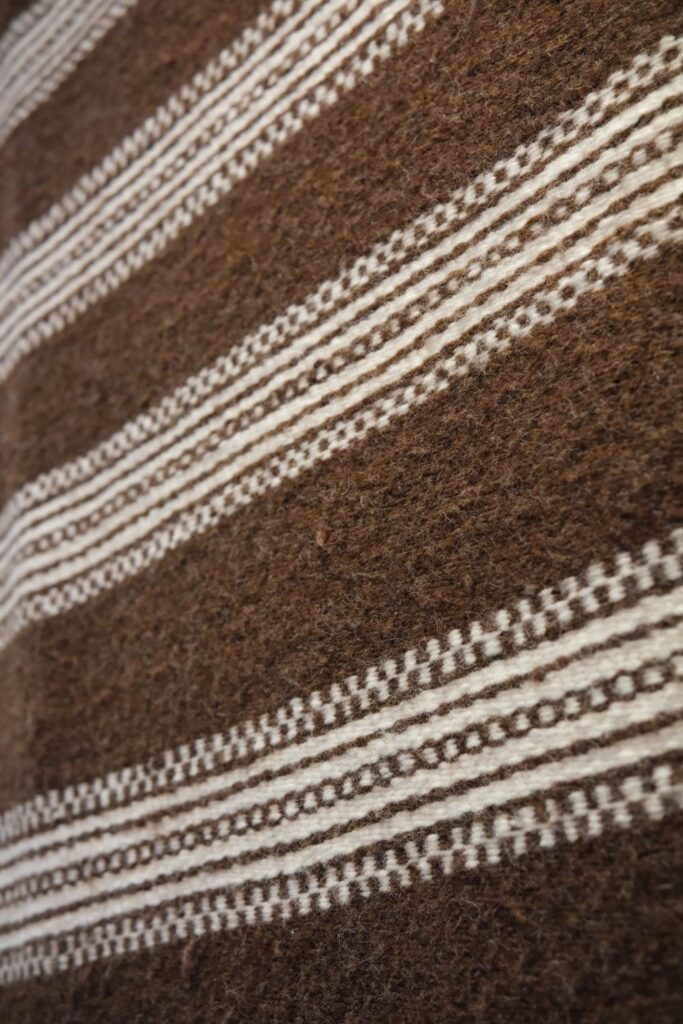
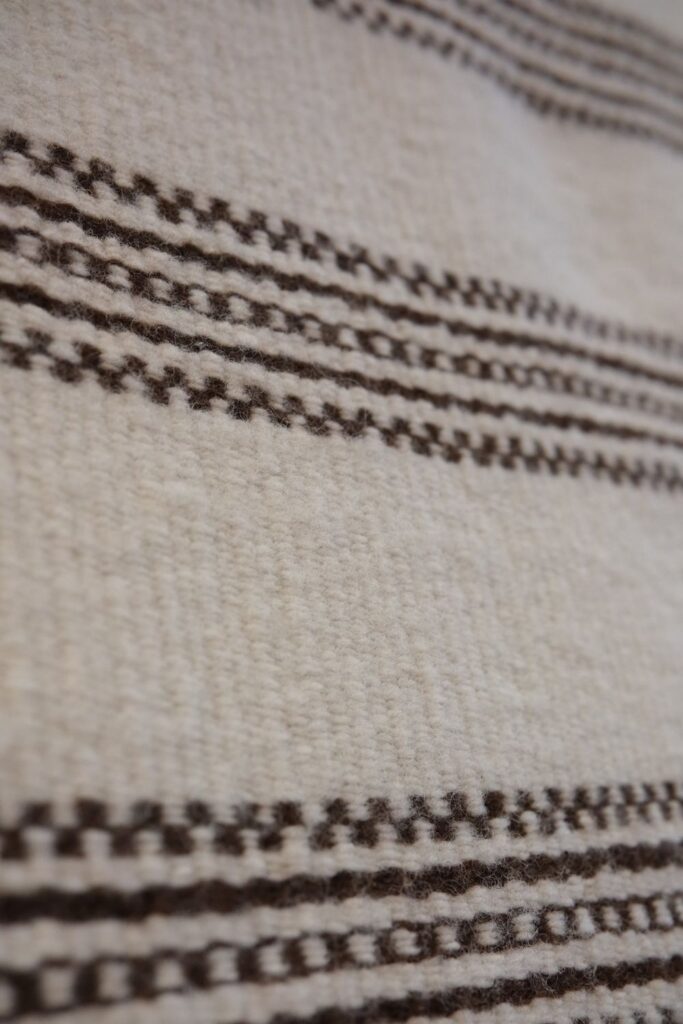
The rátnu is a woven wool textile, and its pattern is one of the most recognisable in Sámi duodji.
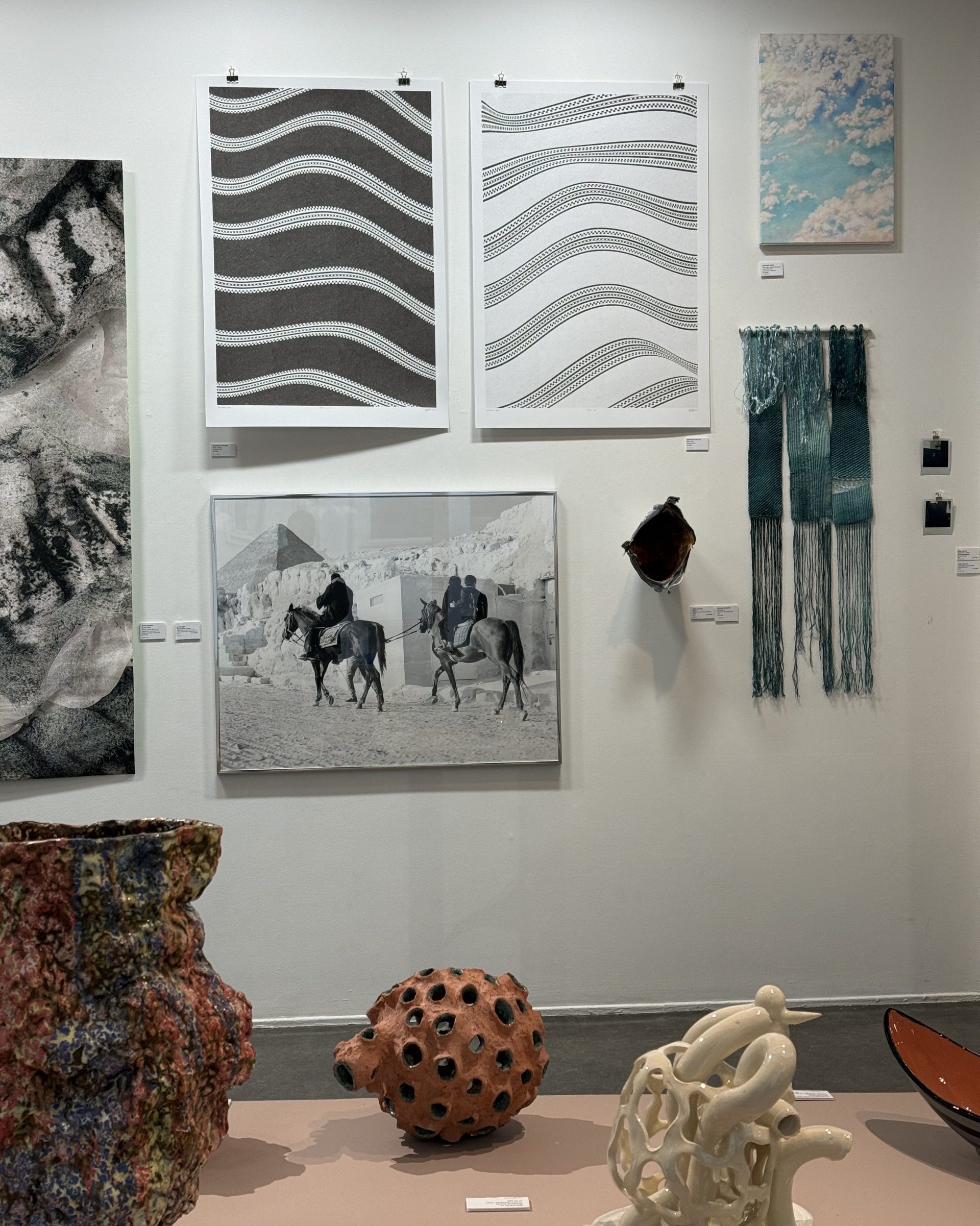
Rátnu OktaSingle-colour screen print, 70×100 cm, 30 ex.
Rátnu GuokteSingle-colour screen print, 70×100 cm, 30 ex.
Ránut were versatile and practical parts of everyday life in the North. The pattern is easy to recognise, and it has long been an important form of Sámi duodji, both as functional design and as a marker of cultural identity.
The two Rátnu prints take the pattern apart and let the bands run across the whole sheet. Rátnu Okta has black bands on white paper. Rátnu Guokte turns it around, with light bands on a dark ground. The bands are inspired by the shapes of the Duottar (tundra), the open mountain plateau.
At 70×100 cm, they are the largest prints I made. Both are single-colour screen prints in editions of 30, numbered and signed.
Exhibition at Kunstnerforbundet in Oslo (2025).Rátnu by an unknown duojár, Sámi allaskuvla.Rátnu by an unknown duojár, Sámi allaskuvla.
2 · The hem of the gákti
Holbi
The holbi is the decorated border at the bottom of the gákti. On the gákti from Guovdageaidnu it has grown into a wide band of colour.
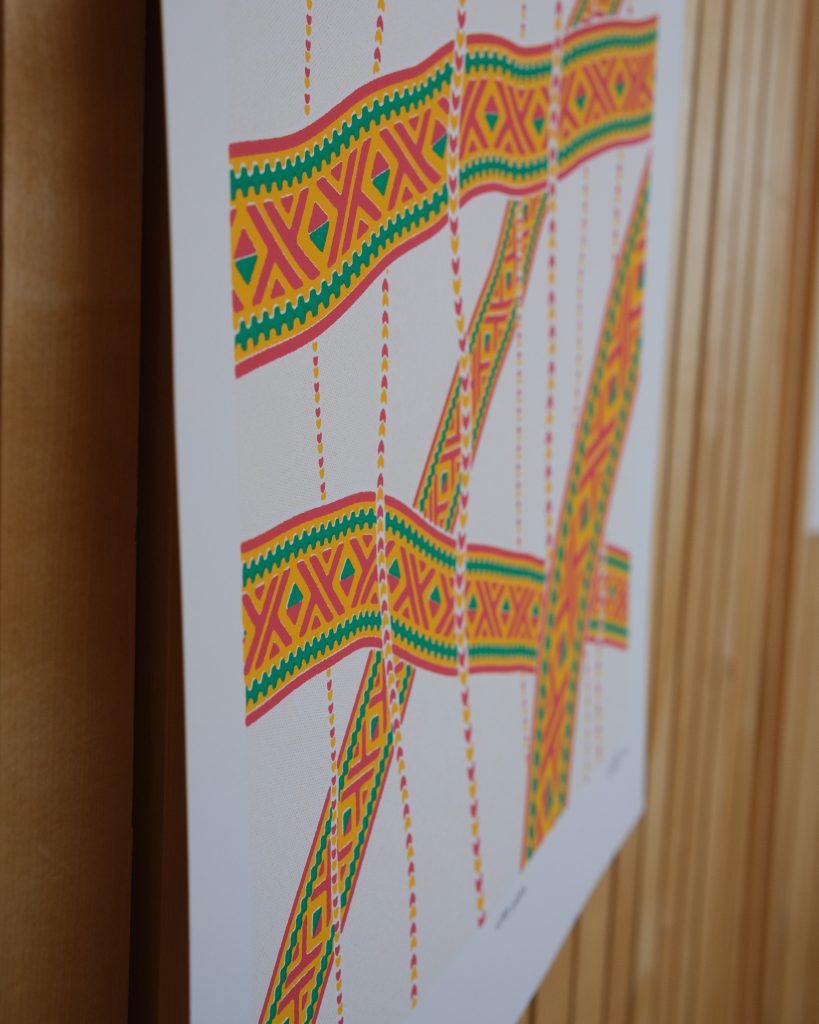
Holbi Guokte Giclée print, 70×50 cm, 5 ex.
The gákti from Guovdageaidnu is often called the most colourful in Sápmi. Its hem is built up of cloth in different colours, thin and wide bands and wavy lisses. On some gákti the holbi runs for several metres.
In the 1950s and 60s, advisers wanted the old decoration replaced with simpler strips of cloth. Local makers went their own way and built borders from lisses and bands, often inspired by the colours of the rainbow. A finished gákti could be recognised by the person who made it, from its shapes, colours and stitches.
A gákti could be recognised by the hand that made it.
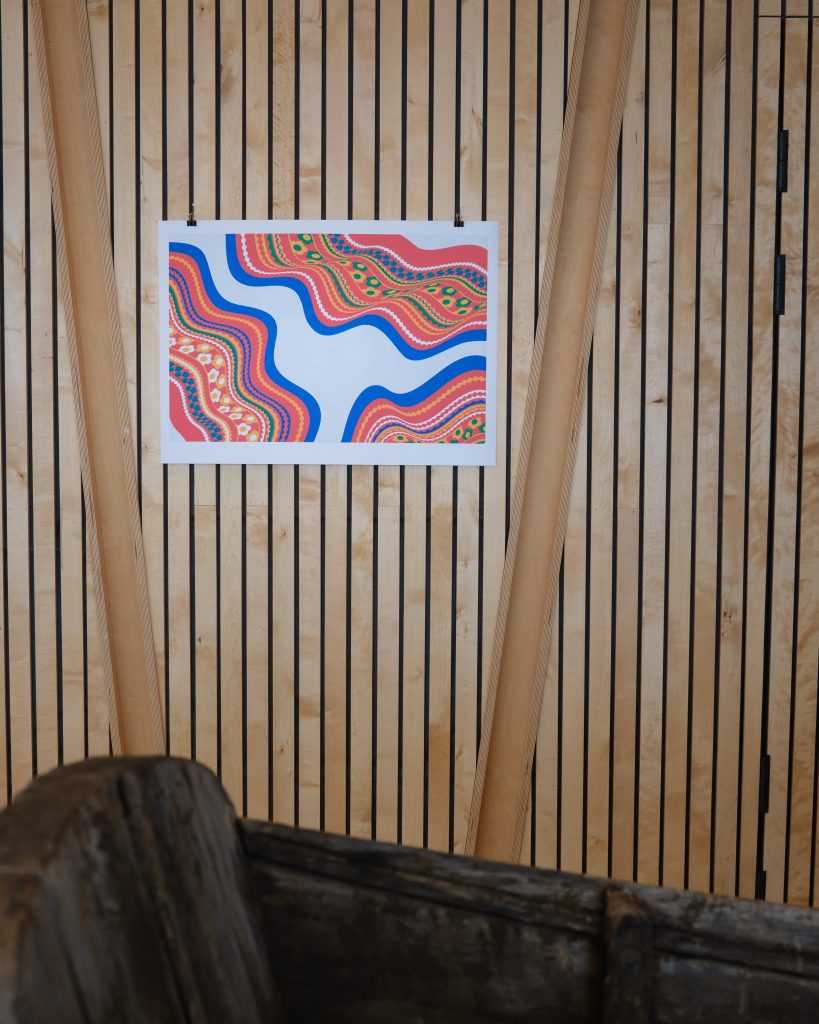
Holbi Okta Giclée print, 70×70 cm, 5 ex.
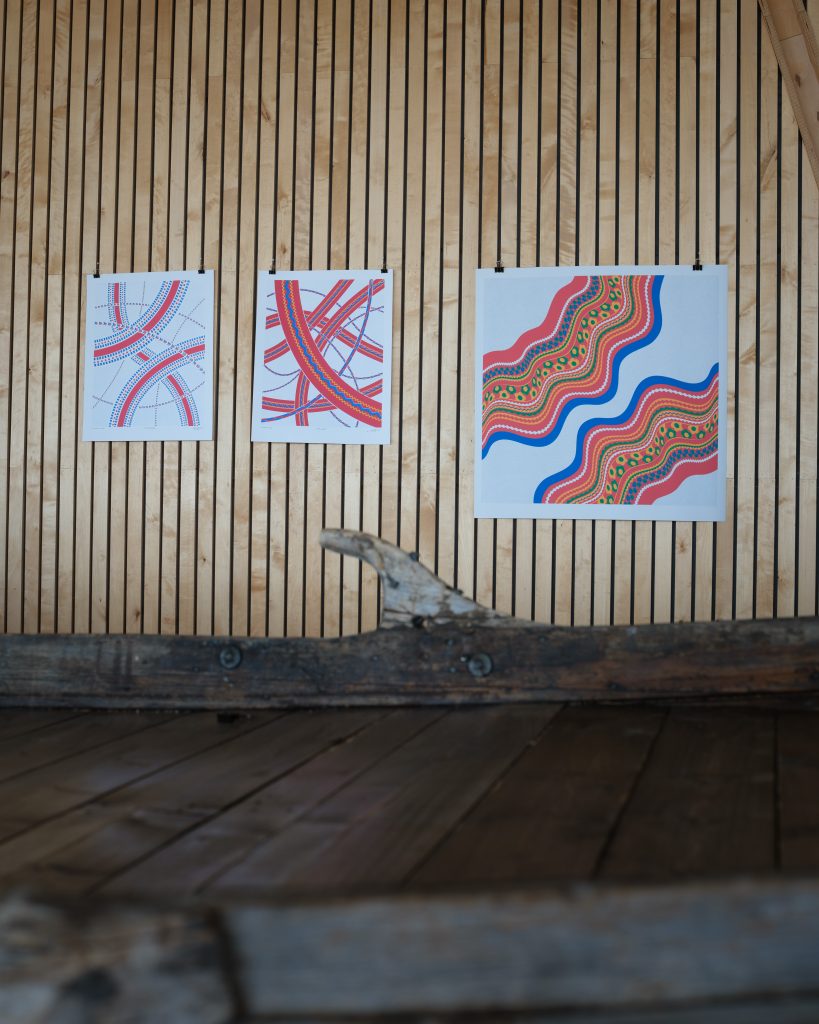
The Holbi prints lift these borders off the gákti and let them flow across the paper as waves of red, blue, yellow and green.
Holbi Okta measures 70×70 cm and Holbi Guokte 70×50 cm. Both are giclée prints in editions of 5, numbered and signed.
Holbi Okta in Ránut ja rievttit, Guovdageaidnu.
Holbi Guokte in Ránut ja rievttit, Guovdageaidnu.
3 · Shoe bands
Vuotta
Vuottat (the woven bands) are wrapped around Sámi gámat (shoes). Their patterns change from one part of Sápmi to another.
The bands hold the shoes in place. On the winter shoes they are wound around the leg just above the ankle. Men’s and women’s bands are different, and the pattern can tell where the person wearing them comes from.
The bands are woven by hand, either plain or with a picked-up pattern, and every area has its own variations.
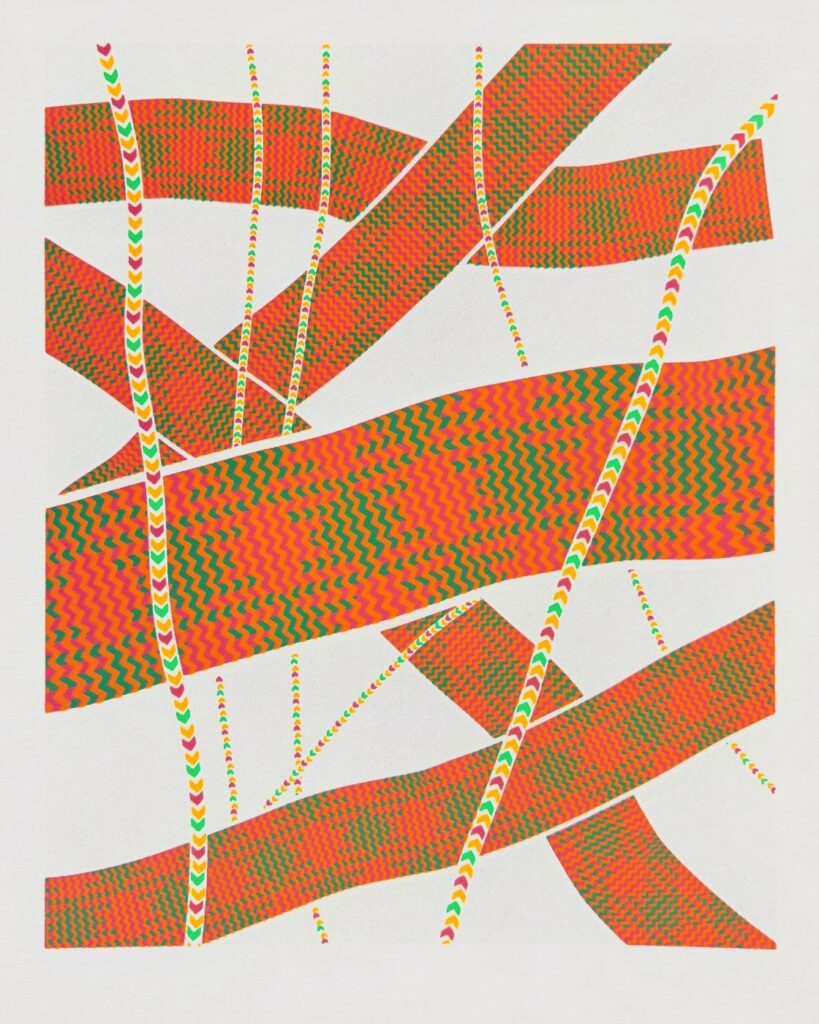
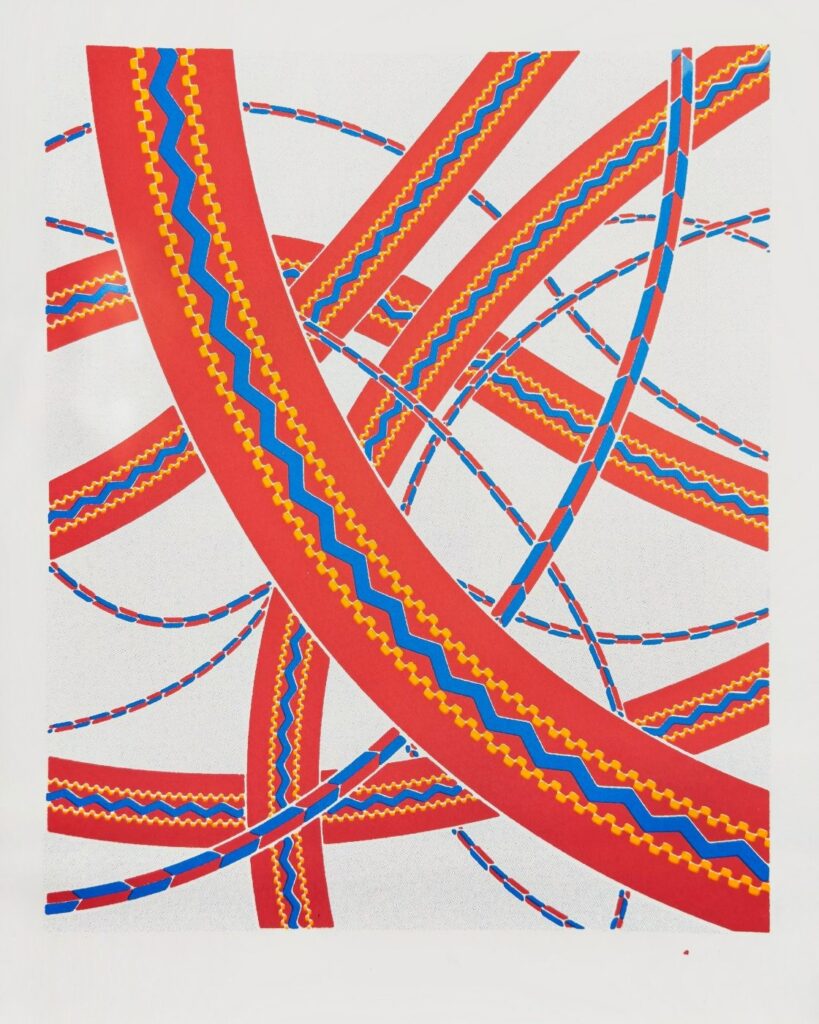
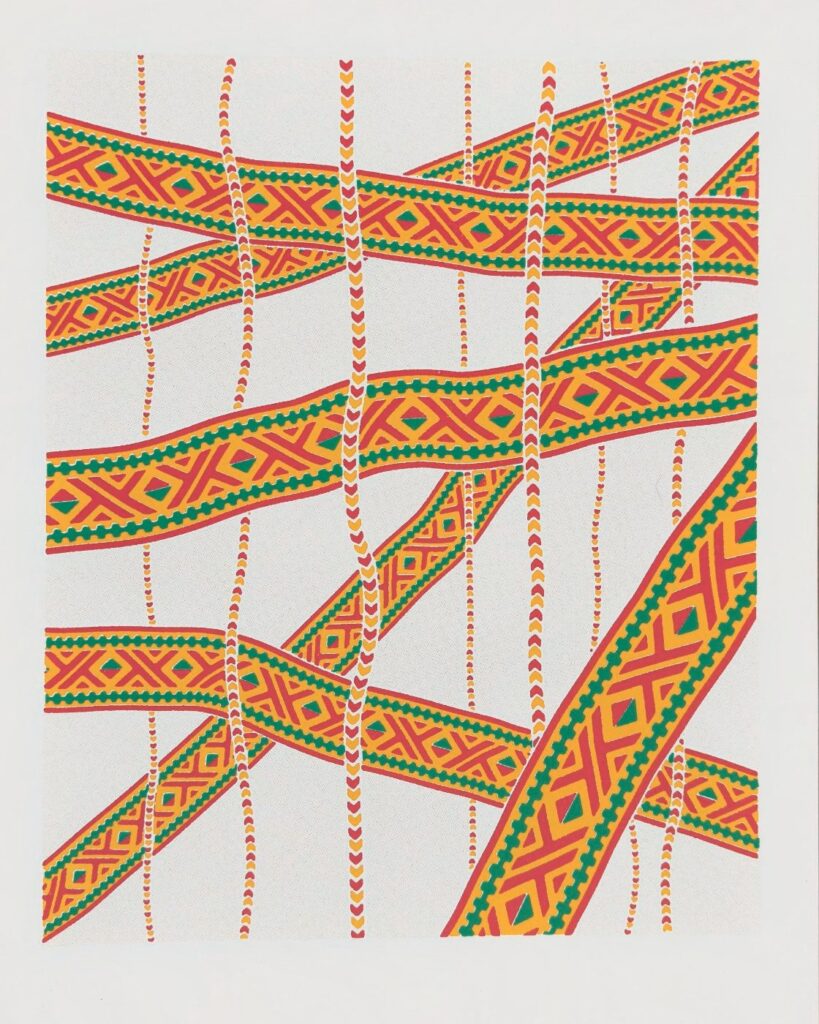
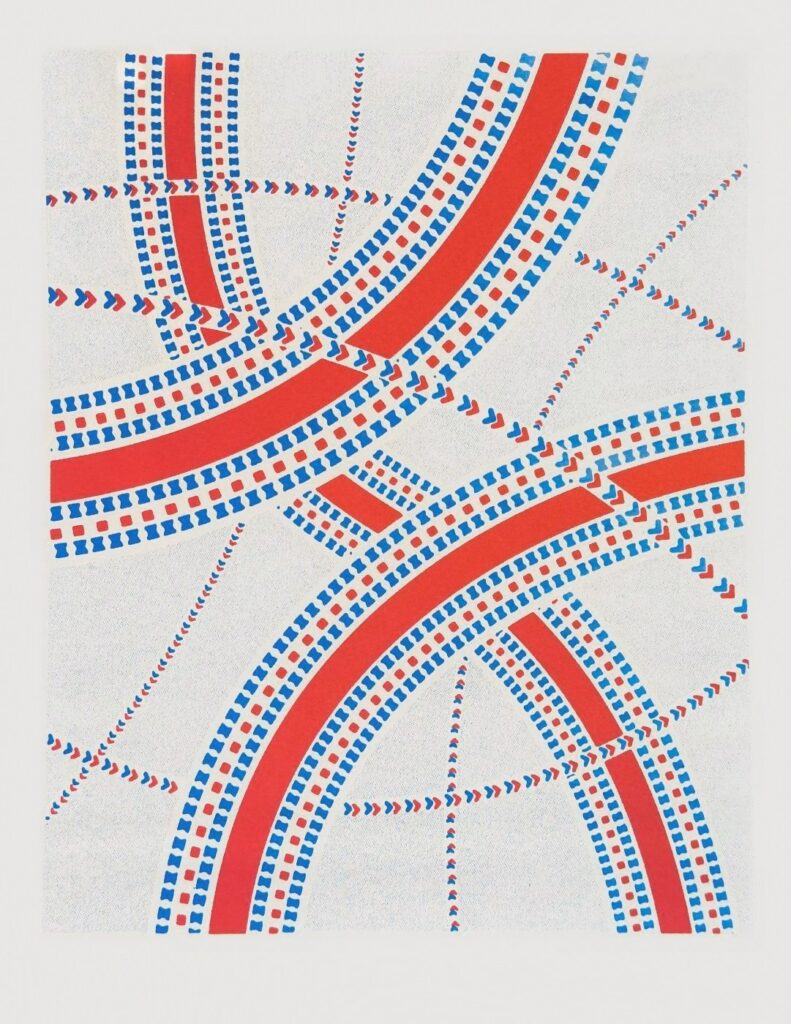
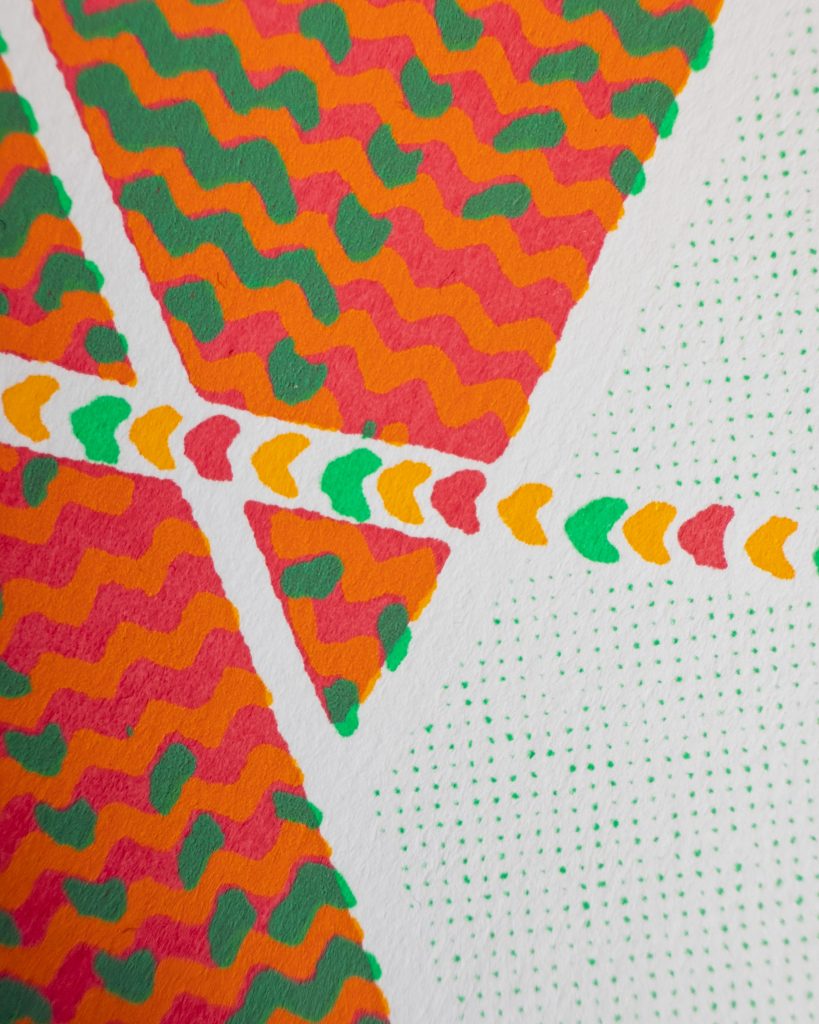
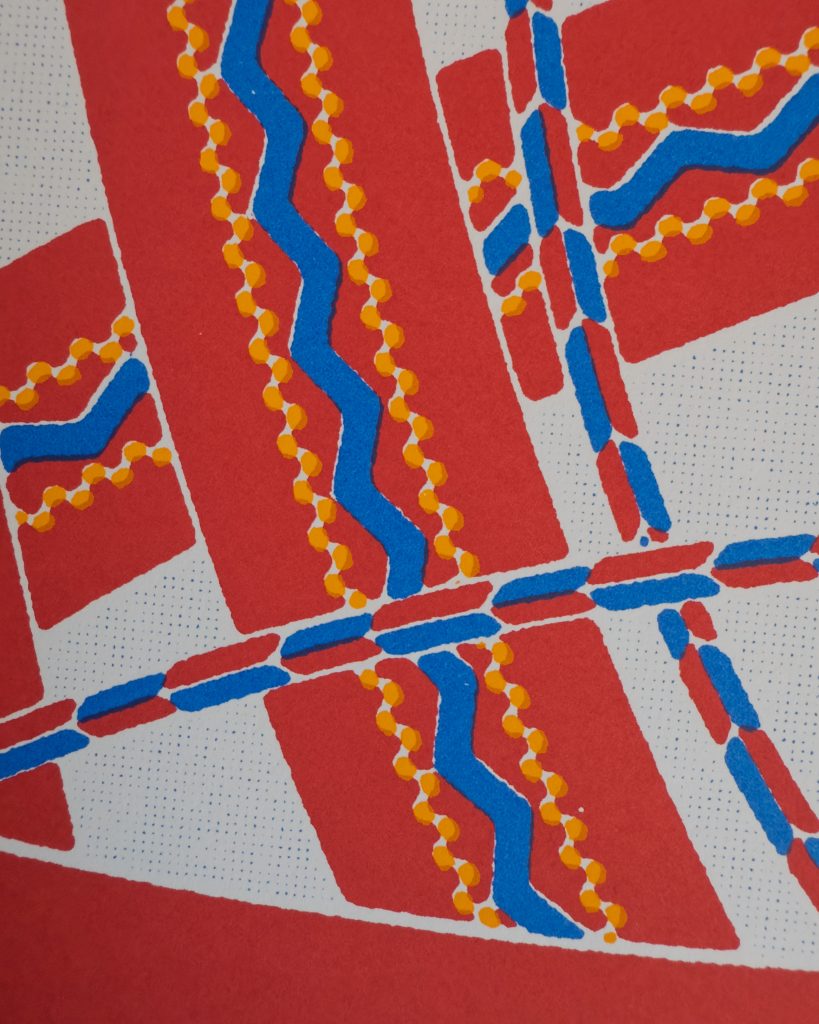
In the four Vuotta prints the bands come loose from the shoes. They cross, twist and overlap like bands spread out on a table.
Vuotta Okta Three-colour screen print, 40×50 cm, 30 ex.
Vuotta Guokte Three-colour screen print, 40×50 cm, 30 ex.
Vuotta Golbma Three-colour screen print, 40×50 cm, 30 ex.
Vuotta Njeallje Two-colour screen print, 40×50 cm, 30 ex.
Vuotta Golbma in Ránut ja rievttit, Guovdageaidnu.
Detail, Vuotta Okta.
Detail, Vuotta Guokte.
In the print shop
At the press
Screen printed at 10/10 Tekstiltrykkeri, one colour at a time.
Each colour has its own screen, and the sheet dries before the next one goes on. Small shifts between the layers are part of the result.
A Vuotta print on the press at 10/10 Tekstiltrykkeri.
On the wall
Čájáhusat / Exhibitions
The Rátnu, Holbi and Vuotta prints have hung in Guovdageaidnu and Oslo. See where in the overview of exhibitions and collections.